
ToLiss hat dem A321 ein neues Update spendiert, welches die Voraussetzung für die NEO-Erweiterung ist. Die Aktualisierung ist bereit via Updater verfügbar und wird weniger später auch in den Shops zum Download bereit stehen. Der A321 NEO wird am 15. Dezember erscheinen und 29,95 Dollar kosten.
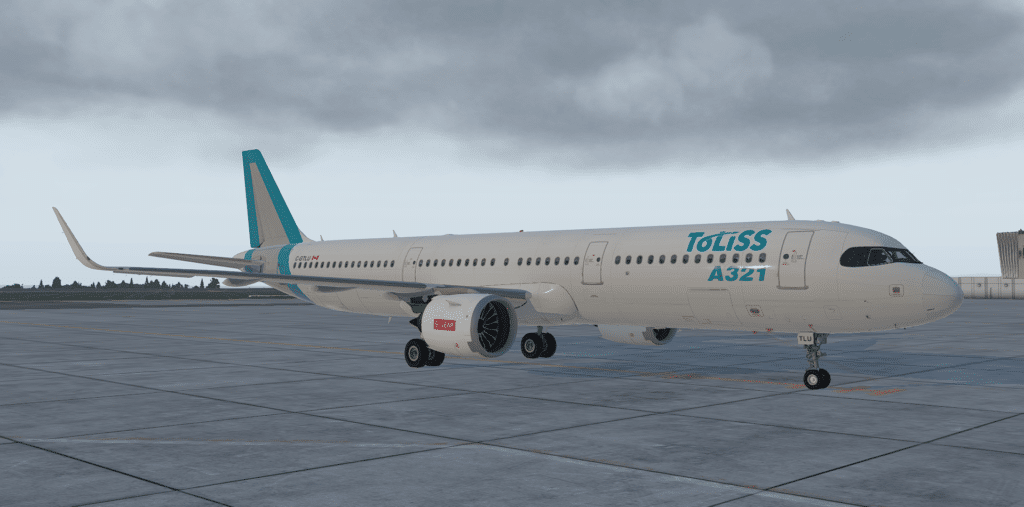
Changelog build 1254 (V1.1) to build 1290 (V1.2)
Major New Features
-Support for the NEO package addon featuring the PW1100G engine and the LEAP 1A engine, including 3 new fuselage exit configurations, A321 LR and XLR fuel tank configurations, A321LR and XLR weight envelopes, accurate fuel burn and climb performance, custom TSS sounds etc.
– Option to use imperial units for FMGS, weights and cabin temperatures
– Complete rework of engine failure handling: ECAM actions and speed target rework, beta target added
Minor new features:
– Improved lateral control laws for better handling during engine failures
– Added injected faults to the situation save.
– Complete rework for the managed speed computation for a given CI during the climb phase
– Retuning of the fuel burn for the existing engine types (IAE + CFM)
– Rework of the EWD for better accuracy of the representation
– Livery specific configuration items can now be done via a livery configuration file
– Added support for approaches with MA route points between the MAP and the runway, like e.g. LOWI RNP-Y for Rwy 08
Bug fixes:
– Fixed issue with disappearing LOC indication when flying the LOC backcourse
– Fixed issues with Minimum callouts when they did not coincide with Radio altitude callouts
– Fixed issue with inconsistent runway naming between procedures and scenery
– Improved smart copilot synchronization of the MCDUs
– Fixed a bug leading to x-plane freeze when changing runway after a go around (under certain conditions)
– Hydraulic brake accumulator pressure does not change anymore when changing from yellow supply to accumulator supply without changing amount of braking
– Fixed an issue with alternate flight plan loading if alternate plan is in „fms“ format.
– Cabin chime queue is fixed so that no chimes are lost anymore.
– Corrected the logic for AC power supply to the system 1 fuel pumps. Direct supply from GEN1 now depends on the GEN 1 LINE switch as it should.
– Corrected vertical guidance for LOWI RNP RWY08 approaches. (You have to make sure to be at flaps 2 when crossing WI750/WI810, the subsequent 3.77deg slope cannot be flown clean without accelerating)
– ILS tracking retuning in LOC and G/S
– BSCU failures now actually do something.
– Limited alternate braking pressure to 1000psi
– Fixes to the VOR cone of confusion model – you do not lose DME or identifier anymore
– Improvements to ILS auto tuning
– Standby DDRMI now uses the same datasource as the VOR/ADF needles on the ND.